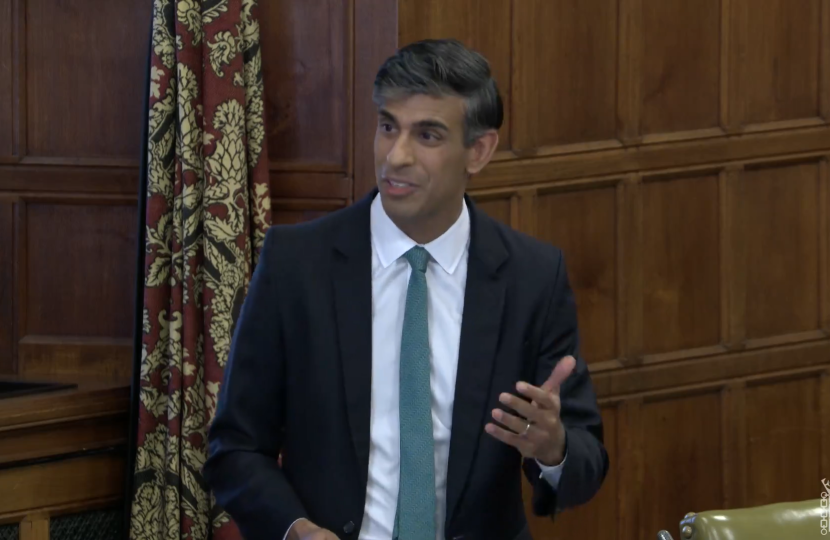
Rishi has called on the Government to review the evidence behind the decision not to introduce routine prostate cancer screening, raising concerns about the assumptions used to assess its costs and benefits.
Speaking during a Westminster Hall debate, Rishi, who is an ambassador for Prostate Cancer Research, paid tribute to men affected by the disease who have dedicated themselves to raising awareness.
He questioned whether the National Screening Committee's economic model accurately reflected the costs of treating advanced prostate cancer, arguing that its assumptions could underestimate the benefits of earlier detection.
Rishi also highlighted emerging research into improved diagnostic techniques and called for the model to be made available to independent experts for greater scrutiny.
Speaking during the debate, Rishi said:
"It is a pleasure to serve under your chairmanship, Dr Murrison. I declare an interest as an ambassador for Prostate Cancer Research. In the work that I do for that charity I have spent a lot of time in the community talking to people affected by prostate cancer and those organising drives, and I am humbled by the many men I have met for whom diagnosis has come far too late to make a difference to their life, but who have chosen to dedicate themselves to this issue and to raising awareness. I think that is extraordinary of them and, as I said, humbling. The most important thing we can do to honour them is to make sure no one else loses a father, grandfather or brother to this cruel disease.
I, like many other campaigners, was disappointed with the decision of the National Screening Committee. The Budget is not until Wednesday, but colleagues know I like numbers, so I dove into the model behind that decision and found a few issues that I hope the Minister will go back and have a look at. The model assumed treatment costs of around £27,000, but most independent estimates are far higher. The model assumed that only about a quarter of men received the most advanced drugs—again, audit figures suggest that twice as many do—and that they would not receive that treatment for more than three years, when the evidence is that they receive it for longer. All those gaps understate the positive case for screening that has been verified by the independent York Health Economics Consortium.
Further to that, we heard about the concern regarding overtreatment, but modern diagnostic pathways offer ways to reduce unnecessary treatment and diagnosis. Given the time available to us, we do not need to go into all the details, but the evidence this year from the Cochrane review that looked at 800,000 men’s experience, and from the Swedish study into the success of the new Stockholm3 trial, indicated that the evidence is moving faster than the committee is moving. I am delighted that the Government have committed to a living model. Will the Minister commit to publishing the workflow perhaps by January, so that we know when the model will be updated with the new evidence and what the workstreams are for that, particularly on the new survival assumptions and costs? Will she also open up the model, as National Institute for Health and Care Excellence does, to independent experts, because then we can have real scrutiny and debate the assumptions."